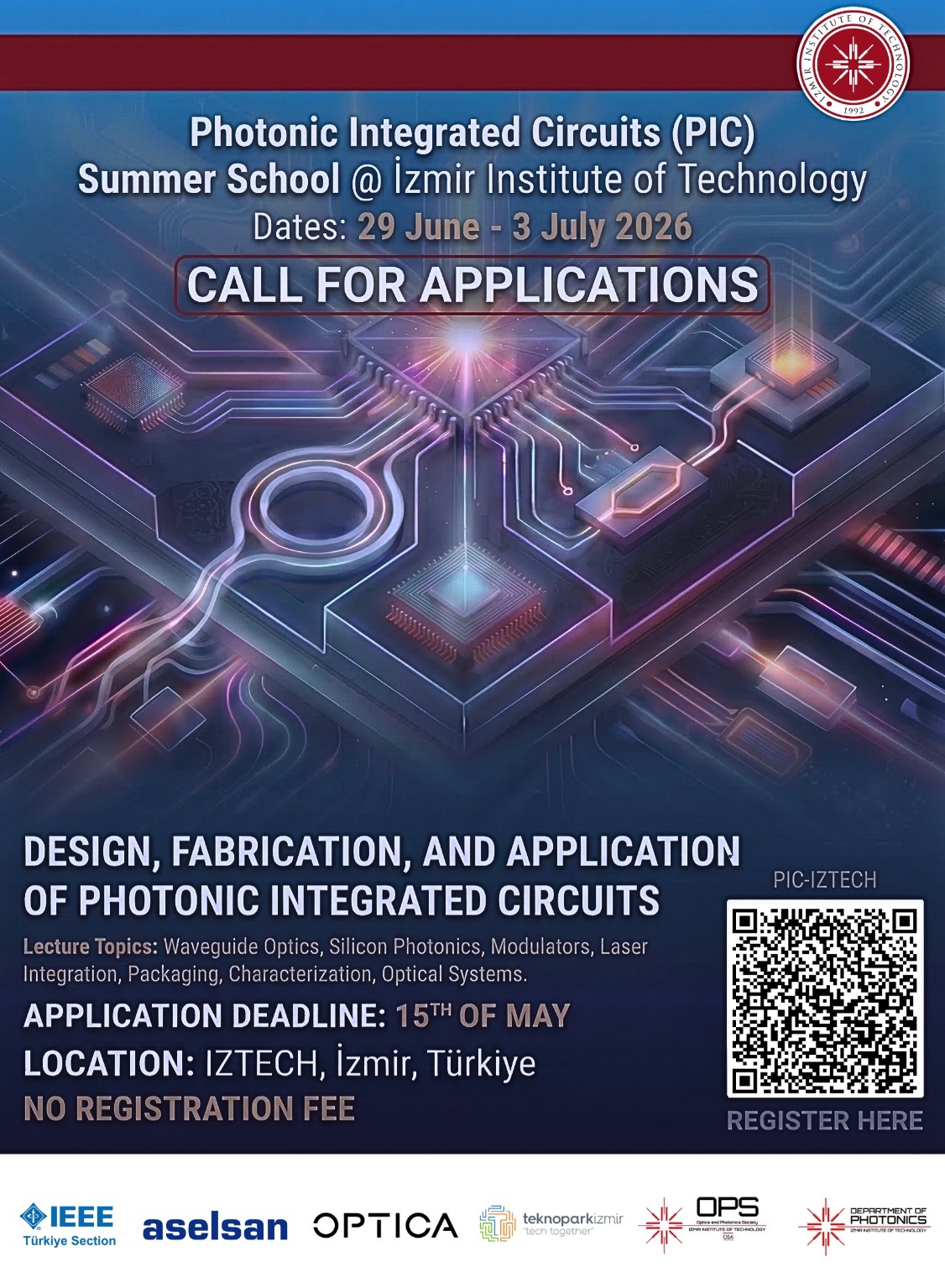
Photonic Integrated Circuits (PIC) Summer School @ İzmir Institute of Technology (IZTECH) PIC-IZTECH

The PIC-IZTECH Summer School is a premier educational initiative dedicated to the field of Photonic Integrated Circuits. Organized by the Izmir Institute of Technology (IZTECH) in collaboration with IEEE Türkiye Section, this intensive five-day program is designed to bridge the gap between theoretical knowledge and practical application. Our mission is to empower a selected group of 30 high-potential students by providing them with direct access to world-class expertise and cutting-edge research in photonics.

Commitees

Organizing Committee
The Organizing Committee is responsible for the overall planning and academic coordination of the summer school. The committee defines the scientific scope, invites lecturers and speakers, and oversees the structure and quality of the program.

Members

  • Canan VARLIKLI, PhD – İzmir Institute of Technology Department of Photonics, Chair
  • Hasan GÖKTAŞ, PhD – IEEE Photonics and Solid State Circuits Society, Turkey Chapter Chair
  • İbrahim Halil GİDEN – ASELSAN
  • Tuncer BAYKAŞ, PhD – IEEE Türkiye, Vice Chair

Local Organizing Committee

The Local Organizing Committee manages the local logistics and operational aspects of the event, including venue coordination, participant support, registration, and on-site organization.

Members

  • Ilgın ŞERİFOĞLU – IZTECH – OPS OPTICA Student Chapter, Chair
  • Ozan Deniz AGUŞ – IZTECH – Department of Photonics
  • Sena Kavas – IZTECH – Department of Photonics
  • Ebrar Arda – IZTECH – IEEE Photonics Society, Chair
  • Yağız OYUN, MSc – IZTECH Department of Photonics
  • Canan VARLIKLI, PhD – IZTECH Department of Photonics, Chair

Curriculum

Components

Establishes a strong foundation by exploring the essential building blocks of light-based systems. Participants will focus on fundamental photonic structures, specifically designing Mach-Zehnder interferometers, Michelson interferometers, waveguides, and ring resonators. This section also bridges theory with practice by introducing passive fabrication processes, helping students understand how these theoretical components are physically manufactured.

Circuits

Focuses on the architecture and integration strategies required to develop complex photonic systems. This section examines how individual components are orchestrated into functional circuit layouts. Students will learn the challenges of physical integration and how to prepare their circuits for real-world testing, including the physical measurement and characterization of their fabricated chips.

Design

Provides a hands-on approach to the advanced simulation methodologies and industry-standard tools used to model high-efficiency Photonic Integrated Circuits. Participants will utilize Ansys to simulate and optimize their photonic designs. Furthermore, the curriculum emphasizes practical layout generation using K-Layout, incorporating specific Process Design Kit (PDK) extensions to rigorously test and ensure that all student designs are strictly compatible with the targeted fabrication process.

Application

Explores the diverse landscape of integrated photonics through real-world implementations. This pillar covers high-impact fields including neuromorphic computing and brain-computer interfaces, next-generation optical interconnects, advanced Photonic-MEMS based active conponents (phase shifter, etc) and sensing technologies. Participants will learn how Photonic Integrated Circuits are transforming healthcare, data communication, and industrial automation.

Lecturers

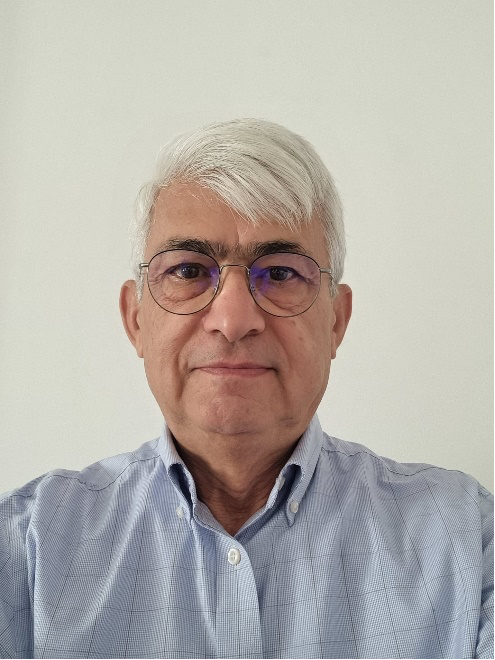
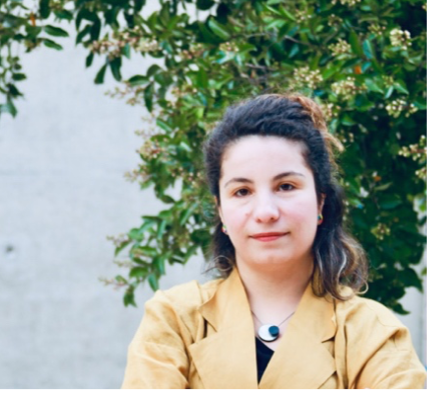
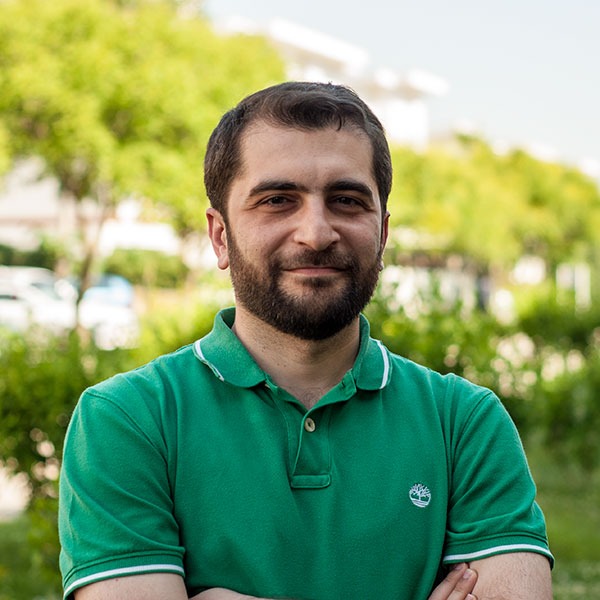
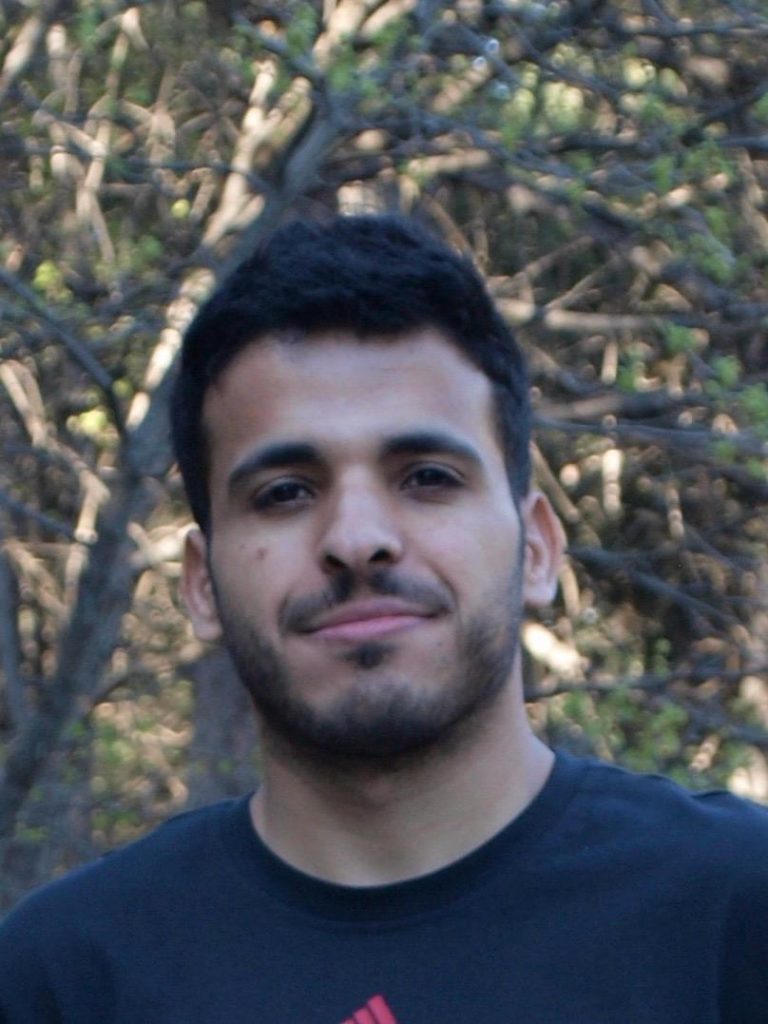
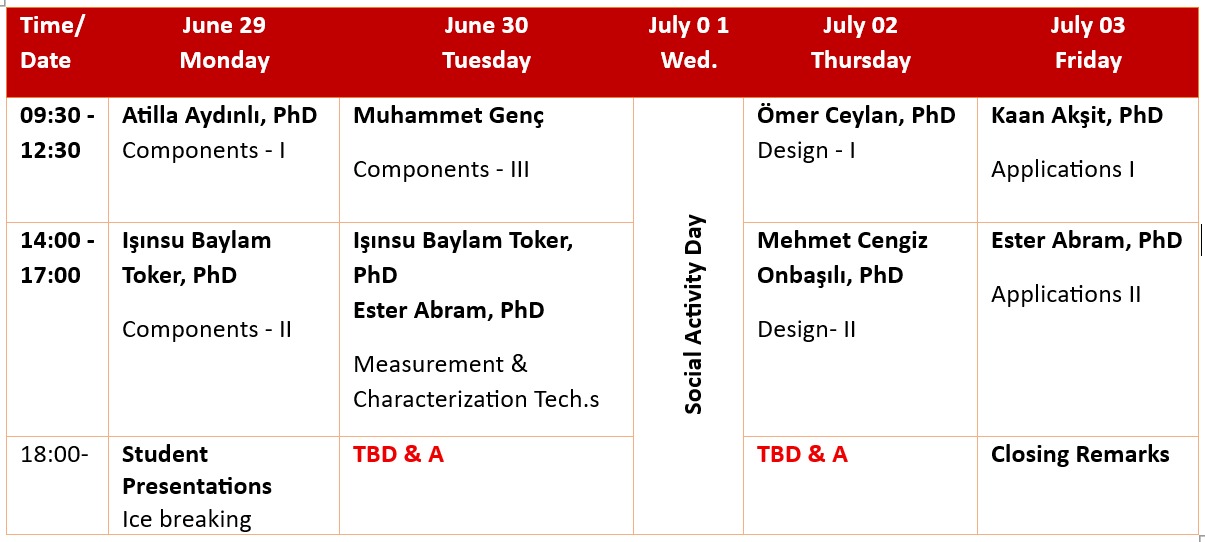
Ester Abram, PhD

Dr. Ester Abram is a Postdoctoral Researcher in the Biophotonics and Medical Imaging group at Vrije Universiteit (VU) Amsterdam. With a multidisciplinary background in Mechanical Engineering and Physics & Astronomy, her expertise bridges fundamental physics and experimental applications. Her doctoral research utilized ultrafast laser systems to study light-induced damage in nanometer-thick films, crucial for semiconductor metrology. Currently, Dr. Abram focuses on high-precision all-optical approaches for biomedical applications, combining her technical research skills with a passion for multidisciplinary teamwork at the intersections of optics, materials science, and biophotonics.

Atilla Aydınlı, PhD

He graduated from the Department of Physics Engineering at Hacettepe University in 1975. After receiving his Ph.D. from the University of Virginia in 1981, he conducted postdoctoral research at Kansas State University. Appointed to Hacettepe University in 1982, Dr. Aydınlı worked at the Department of Physics at the University of Padova between 1988 and 1989, where he studied strain at interfaces using the RBS method. He became an Associate Professor in 1984 and a Professor in 1990. In the same year, he served as a Visiting Professor at the University of Toledo.

In 1991, he joined the Department of Physics at Bilkent University. Between 1997 and 1998, he conducted research on integrated optics as a Fulbright Professor at the University of California, Santa Barbara. In 2016, he moved to the Department of Electrical and Electronics Engineering at Uludağ University, where he established the Optical and Photonics Master’s program and the monthly Colloquium series. He retired in 2020 and currently provides photonics consultancy.

He has published his research in 180 articles. He was part of the team that established laboratories at Bilkent University and Ermaksan A.Ş. He has led various projects, including one supported by the EU, and has worked with numerous postdoctoral, doctoral, and graduate students. He has been involved in the organization of many workshops and founded the National Optics, Electro-Optics, and Photonics Workshop at Bilkent University in 1999. His primary research interests include semiconductor physics and technologies, quantum cascade lasers, Type-II superlattice infrared detectors, (In)GaN-based LEDs, high-power semiconductor lasers, laser-matter interactions, integrated optics, and surface plasmons.

In 2016, he joined the Department of Electrical and Electronics Engineering at Uludağ University and retired in 2019 due to the mandatory age limit. Currently, Professor Aydınlı provides consultancy and support for projects in the fields of fiber lasers and photonics. His research interests include nanocrystals, semiconductor materials and lasers, waveguide optics, plasmonic cavities, and high-power and ultrafast fiber lasers.

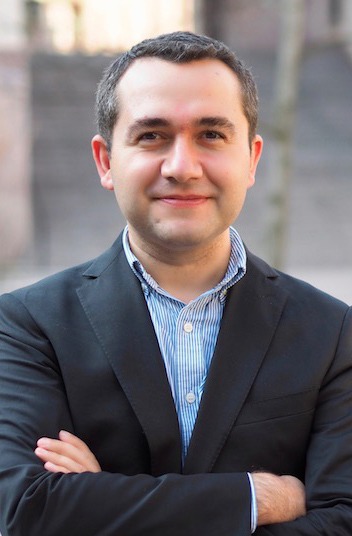
Işınsu Baylam Toker, PhD

Dr. Isinsu Baylam Toker is an Assistant Professor in the Department of Physics at California Polytechnic State University (Cal Poly), San Luis Obispo CA, United States. She received her PhD (2017) and MS (2012) in Physics from Koc University in Istanbul, Turkiye, and her BS (2010) in Physics from Bilkent University in Ankara, Turkiye. Following her PhD, she worked as a researcher at the Koc University Surface Science and Technology Center. Her research includes development of femtosecond and continuous-wave solid-state lasers, applications of solid-state lasers, ultrafast nonlinear spectroscopy, and physics education. Dr. Baylam Toker is an OPTICA Senior Member and Ambassador. She is also a member of Lindau Nobel Laureate Meetings Alumni Network, SPIE, and APS. Through her service with OPTICA, she has contributed to international science outreach, mentorship, and award and scholarship selection committees. At Cal Poly, she serves as the Faculty Advisor for Women in Physics and OPTICA Clubs and was named Physics Faculty of the Year (2024-2025) by the Society of Physics Students.

Ömer Ceylan, PhD

Ömer Ceylan received the B.S. degree in Microelectronics Engineering and the M.S. and Ph.D. degrees in Electronics Engineering from Sabanci University, Istanbul, Turkey, in 2006, 2008 and 2016, respectively. He is currently a researcher in Sabanci University. His research focuses on mixed signal IC design and readout integrated circuit (ROIC) design for sensor interfaces. His research interests include infrared imaging systems and sensor readout circuits for bio-sensors. He has several journal and proceeding papers in IEEE, Infrared Physics & Technology and SPIE. He also received entrepreneurship award with his teammates in 2012 from Republic of Turkey Ministry of Science, Industry and Technology. 

Muhammet Genç, MSc

Muhammet specializes in III/V and GaN-based photonic devices, with a focus on the development of laser diodes (EELDs, HCSELs, VCSELs), horizontal-cavity and surface-emitting superluminescent diodes (SLDs), and micro-LEDs. His research contributes to advancing scalable photonics through the heterogeneous & 3D integration of photonic devices, photodiodes, transistors, and passive components onto photonic integrated circuits (PICs) and waveguides. This integration enhances the performance of technologies in micro-displays, holography, sensing, quantum computing, and communication systems. He also served as co-founder and CTO at Vivid Photonics, where he worked to commercialize a speckle-free light engine technology for AI glasses. The company was one of the finalists in the 2025 SPIE Start-Up Challenge.

Mehmet Cengiz Onbaşlı, PhD

Dr. Mehmet Cengiz Onbaşlı is an accomplished Associate Professor at Koç University. With a background in both electrical-electronics engineering and materials science and engineering, his research focuses on spintronics, quantum technology, and advanced sensing devices. He has earned recognition for his work on topologically protected spin chirality and emerging biosensing technologies.
Dr. Onbaşlı’s contributions to the scientific community are substantial, boasting over 4,000 citations and more than 60 publications in high-impact journals. He delivered 30 invited talks. He is the recipient of prestigious grants, including the ERC Starting Grant SKYNOLIMIT and ERC Proof of Concept grant SuperPHOTON. His leadership extends to multiple international collaborations, contributing to groundbreaking projects including the EURAMET quantum anomalous Hall effect study and innovative work in nonreciprocal RF microwave components.
In addition to his research, Dr. Onbaşlı is a dedicated educator with extensive teaching experience at institutions like MIT and Koç University. He is also a prolific author, actively preparing instructional materials, lab manuals, and online textbooks. As a co-founder of VRables Lab A.Ş. and Actinfly A.Ş., he bridges academia and industry, driving innovation in photonics and autonomous drone technologies. His expertise encompasses X-ray diffraction, vibrating sample magnetometry, pulsed laser deposition, and machine learning algorithms, reflecting his multifaceted contributions to science and technology.

Social Program

Experience the rich history and beautiful coastline of the Aegean region. The program includes:

  • A guided full-day tour to the Ancient City of Ephesus, a UNESCO World Heritage site.
  • Evening social gatherings in the coastal town of Urla, known for its unique gastronomy and summer atmosphere.

Accomodation and Food

Participation & Fees

We are pleased to announce that the PIC-IZTECH Summer School is free of charge for all accepted participants. There is no registration fee to attend the scientific sessions and workshops.

Accommodation

Participants are responsible for arranging their own accommodation. We recommend the following options located on or near the IZTECH campus:

  • KYK Dormitories: For state-operated housing, please check the KYK official website.

  • İYTE Yaşam Merkezi (Living Center): A private facility on campus. Visit their website for details: iyteyasammerkezi.com.

Special Note: Preliminary discussions have been held with the IZTECH Yaşam Merkezi for this event. Participants are encouraged to contact them directly to inquire about discounted rates available specifically for summer school attendees.

Dining & Social Activities

While the program itself is free, please note that most personal expenses for food and beverages belong to the participants, with the following exceptions provided by the organization:

  • Lunch: Lunch at the IZTECH Cafeteria (Yemekhane) will be covered by the organization for all 5 days.

  • Ice-Breaking Event: On the first day, lunch will be provided to welcome our participants.

  • Other Meals: Breakfast, dinner, and snacks outside of the organized lunch hours are at the participants’ own expense.

  • Social Event: For our planned social activity, only transportation (transfer) will be provided by the organization. Any personal expenses (food, entrance fees, etc.) during this event will belong to the participants.

Registration

Eligibility and Application

Applications are open to highly motivated undergraduate and graduate students with a strong interest in the rapidly evolving field of integrated photonics. Due to the intensive and hands-on nature of the curriculum, the program is strictly limited to 30 participants.

Selection Criteria

Applications will be carefully evaluated by the organizing committee based on the applicant’s academic background and potential.

Motivation Letter

A detailed letter outlining your specific interest in PIC technologies and what you expect to achieve by attending the summer school.

Academic Transcript

Your current transcript to demonstrate your coursework proficiency and academic standing. (Note: Additional documents such as a CV may be requested during the application portal process.)

Accepted participants will be notified via e-mail at June 1.

Important Dates

Applications Open: March 19, 2026

Application Deadline: May 03, 2026

Notification of Acceptance: June 01, 2026

PIC-IZTECH Summer School: June 29 – July 3, 2026

Sponsors

iit-turkey-f6431b56